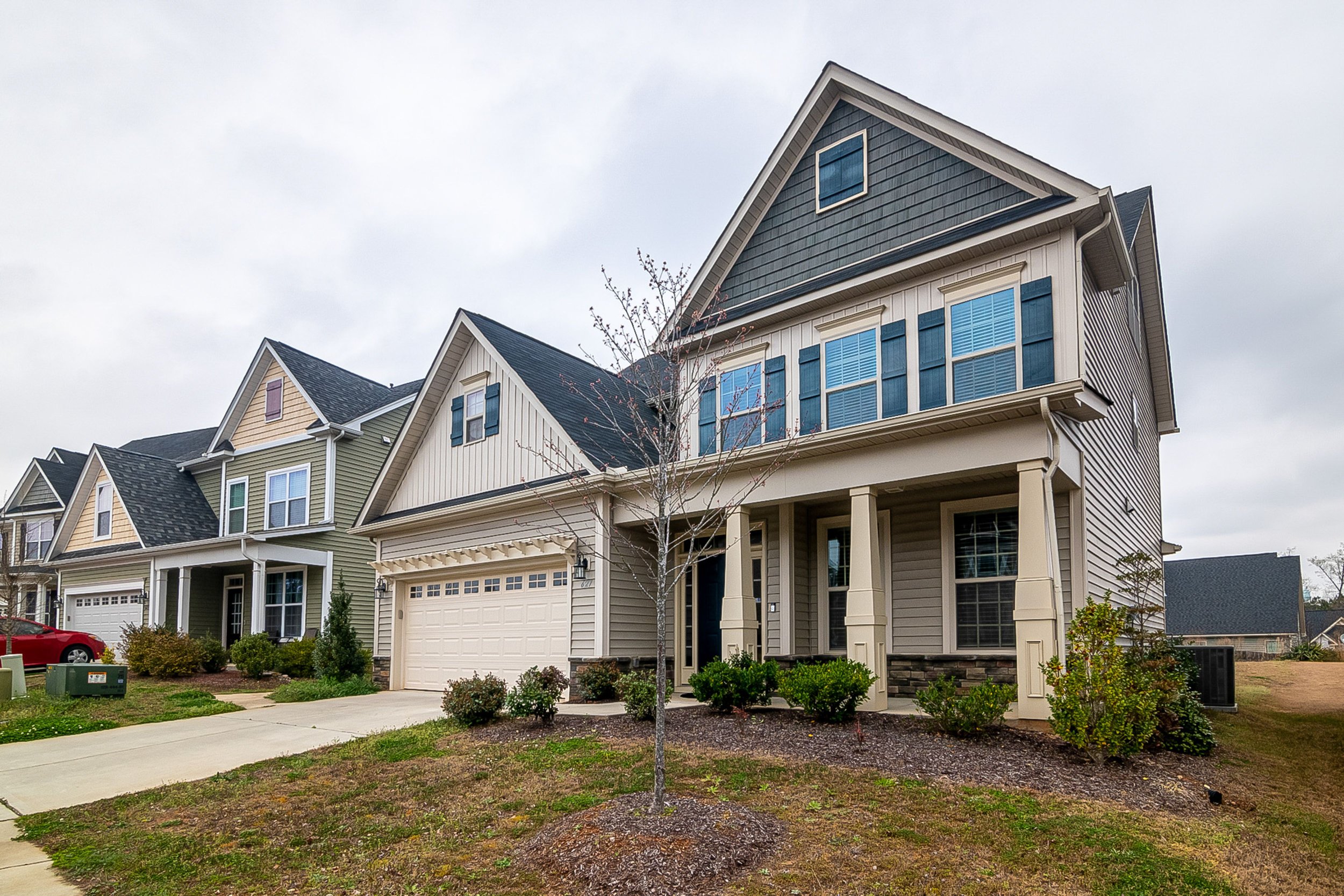
Some of the fastest growth in the Kansas City metro right now is happening in the suburbs: new subdivisions filling in around Lee's Summit, Raymore, and Grain Valley on the Missouri side, and continued expansion around Olathe, Gardner, and Spring Hill on the Kansas side. If you're looking at a new build rather than an existing home, the financing conversation looks a little different than a standard resale purchase, and it's worth understanding before you sit down with a builder's in-house lender.
Two Very Different Paths: Spec Homes vs. Custom Builds
The financing path depends heavily on what kind of new construction you're pursuing.
Buying a spec or production home from a builder (the kind you'll find in most growing subdivisions, where the builder is constructing based on a set of pre-designed floor plans, sometimes already underway or complete): this works a lot like a standard mortgage. You're financing a finished or soon-to-be-finished product, so a conventional, FHA, or VA loan applies in largely the same way it would for a resale home. The main differences are timing, since you may be locking a rate months before closing, and the appraisal process, which uses the builder's plans and comparable new construction sales rather than an existing structure.
Building a custom home on land you own or are purchasing is a different animal entirely, and this is where a construction-to-permanent loan comes in.
How Construction-to-Permanent Loans Work
A construction-to-permanent loan combines two phases into a single loan process:
The construction phase: the lender disburses funds to your builder in draws as work is completed, typically tied to inspections at each stage (foundation, framing, mechanicals, finishes). During this phase, you generally only pay interest on the funds that have actually been disbursed, not the full loan amount.
The permanent phase: once construction is complete and the home passes final inspection, the loan converts automatically into a standard mortgage, with your permanent rate and full principal-and-interest payments beginning.
The advantage of this structure is a single closing and a single set of closing costs, rather than closing once for a construction loan and again for a separate permanent mortgage once the home is finished. Down payment requirements for construction-to-permanent loans tend to run a bit higher than a standard resale purchase, often in the 10-20% range depending on the loan type and lender, and lenders will want detailed plans, a fixed-price contract with a licensed builder, and a realistic construction timeline before approving the loan.
What Lenders Look For
Beyond your standard income, credit, and debt-to-income review, construction financing adds a few extra layers:
Builder vetting: your builder typically needs to be licensed, insured, and often needs a track record the lender is comfortable with
Detailed cost breakdown: a full line-item budget for the build, not just a total price
Appraisal based on completed value: the appraiser is essentially valuing a home that doesn't exist yet, based on plans and comparable finished properties
Contingency reserves: many lenders want to see a built-in buffer for cost overruns, since construction projects rarely come in exactly on budget
Rate Locks and Timing
One of the trickiest parts of new construction financing is the gap between when you apply and when the home is actually finished, which can be six months to well over a year for a custom build. Some lenders offer extended rate locks specifically designed for construction timelines, sometimes with a float-down option if rates improve before your home is complete. This is a conversation worth having early, because a standard 30-60 day rate lock simply won't cover a lengthy build timeline.
Builder's Preferred Lender vs. Your Own Lender
Many builders in the growing subdivisions around the metro offer incentives, closing cost credits, upgrade allowances, or rate buydowns, if you use their preferred or affiliated lender. These incentives can be genuinely valuable, but it's worth running the numbers independently before assuming the builder's lender is automatically your best option. Sometimes the incentive is worth more than what you'd get shopping elsewhere. Sometimes it isn't, once you compare the full rate and fee structure. I'm always glad to run a side-by-side comparison so you can make that decision with real numbers instead of just the promotional flyer.
What This Looks Like in Today's KC Suburbs
Builders throughout Lee's Summit, Raymore, Olathe, and Spring Hill are actively offering rate buydowns and closing cost incentives right now as a way to keep buyers moving in a market where affordability is top of mind for a lot of families. Whether you're buying a finished spec home in one of these communities or building custom on a lot you already own, the financing conversation should start well before you sign a builder contract, not after.
Let's Talk Through Your New Construction Plans
Whether you're eyeing a builder community in the suburbs or planning a custom build on land you already own, let's talk through what financing looks like for your specific timeline, whether that means a straightforward mortgage for a spec home or a full construction-to-permanent loan for a custom build.